Blog
 I love amateur radio. I love radio. I love RF. I love playing with different pieces of equipment, learning about it, installing it, etc. I may never touch it again. It may not interest me any further than my initial interest. But I still like it. I love HF. I love making contacts around the world. If I didn’t, the curmudgeon in me that you will see below would be enough to drive me away from the hobby. It’s a good thing that I take these asshats with a grain of salt, otherwise, I would sell all my crap and go fishing all the time.
Below, there’s a list of things that irritate me and a touch of satire, a little “tongue-in-cheek” look at amateur radio:
- Overdriving and AGC
TLDR; In Amateur Radio, if your reply to a critique of your clipped modulation (overdriven) is “….turn on your AGC.” and that’s the only way to “fix” your transmission, you’re wrong, that’s just selfish and narcissistic behavior. I am not trying to be a “know it all”. In fact, I contacted the person I was trying to help through email and I did not mention the issue in the open, on the air, with the group. The person I had dealings with brought it up over the air and made a point to tell me to “turn on your AGC.” as a fix for THEIR PROBLEM. In turn, folks like this have influenced others in their group (not all others, but a few) that this is the correct way of doing things and that could not be further from the truth. Is it a way of fixing the issue? Yes. Is it the right way? Absolutely not!
This entire blog entry took me all of 30 minutes to formulate and write, don’t give me that boomer response of “….you have too much time on your hands.” Use your fucking brain and think about stuff and don’t let your emotions or contrarianism influence your behavior. Yeah, good luck with that.
Sigh. Anyway…..
Granted, if you’re within a city block of someone else and they appear to be overdriving, I can see where some sort of decrease of RF gain on the receiver’s end may be needed because the close TX station can’t decrease enough and still be hearable by distant stations. But if you’re 100-200 miles away from someone and your audio signal is clipping to the RX station without AGC, YOU ARE OVERDRIVING YOUR SYSTEM.
Again, I don’t know why people feel the need to crank up their legal limit amplifiers for conversations with a group that are all within 200 miles of each other during normal operating conditions. My thoughts on this aren’t because I lack a legal limit amplifier. I’ve had amps, I just find that I can make the contacts (252 DX entities to date, with around 130 of those coming since I began taking DX’ing seriously 3 years ago) with 100 watts or less. Any argument or thought that boils down to “…..having a legal limit amplifier makes me a better ham radio operator than a 100 watt guy.” is of course, classic narcissism.
First, an amateur radio station in the United States is only authorized to use the minimal amount of power necessary to conduct a QSO.
FCC rule 47 CFR § 97.313(a) legally requires all amateur radio operators to use the minimum transmitter power necessary to maintain a clear and reliable conversation. Maxing out your output power (such as running the legal limit of \(1.5 \text{ kW}\)) when a much lower wattage would suffice is a direct violation of FCC regulations. [1, 2, 3]This mandatory rule promotes “good neighbor” operations, prevents unnecessary signal interference, and directly ties into FCC RF exposure safety requirements. [1, 2, 3, 4, 5]Here are the key details to keep in mind regarding this rule:- Signal Reports (S-Units): Base your transmit power on the signal report (RST or S-meter reading) you get from the other operator. If they are already copying you perfectly (e.g., an \(S9\) signal), you should dial your power down. [1, 2]
- Power vs. Clarity: The rule applies strictly to the power required to carry out desired communications. If atmospheric conditions degrade and you need more power to be understood, increasing your output is perfectly legal, provided you remain below your license’s maximum allowed limits. [1, 2]
- General Power Ceilings: While you must use the minimum amount, your station’s output can never exceed your license privileges (e.g., a General or Extra Class maximum of \(1.5 \text{ kW}\) Peak Envelope Power (PEP), or a Technician Class maximum of \(200 \text{ W}\) PEP on most HF bands).
If I, with 100 watts (or less), can have said QSO with someone, they do not need legal limit amplification to have said QSO.
Second, when a waveform of a transmission’s audio looks like this, you’re overdriving and putting the burden of cleaning up the signal on the receiver. Folks, that’s just selfish and narcissistic behavior.

Here’s a few reasons why this is selfish and narcissistic:
- You’re pushing the “fix” onto someone else, which;
- Calls for the receiving station to be of a certain quality, having the ability to turn on AGC, in order to hear and understand your transmission. Not all radios have AGC. Regardless of what YOU think or what YOU have, other stations may not have the ability, which in turn will cause you to continue the argument with:
- If they can’t hear me, that’s their problem. Completely narcissistic (and selfish).
- Calling for anyone to do something in order to make your product appear “right”, is of course, absolutely and totally WRONG.
- Arguing that this isn’t being narcissistic is in itself, narcissistic. Backing those kind of friends that exhibit this behavior is enabling the narcissist, for whatever reason.
- Considering the standard practice for FT8 ops has been, from the onset, no AGC for FT8 reception. FT8 was developed by Nobel Prize-winning physicist and radio astronomer Dr. Joe Taylor (call sign K1JT) and Dr. Steve Franke (call sign K9AN) – Tell me again why you think you know more about FT8 than they do? A FUCKING PHYSICIST recommends NO AGC for FT8 reception. What’s your CV? 40 years of “..but that’s how we do things.” lol.
Speaking of AGC – Here’s what the interswebs says about AGC vs. FT8.
Turning off AGC for FT8 helps prevent strong signals from overwhelming weaker ones, improving decoding performance. This setting allows for better control over signal levels, especially in crowded frequency bands.
Benefits of Turning Off AGC for FT8
Turning off Automatic Gain Control (AGC) when using FT8 can significantly enhance your digital communication experience. Here are the main reasons:
Improved Signal Decoding
- Prevents Overwhelming Signals: With AGC off, strong signals do not overpower weaker ones. This is crucial in crowded bands where multiple signals are present.
- Better Control: You gain more control over the signal levels, allowing for clearer decoding of weaker signals that might otherwise be lost.
Enhanced Performance in Crowded Conditions
- Reduces Signal Pumping: AGC can cause strong adjacent signals to “pump” the gain, leading to poor decoding. Turning it off helps maintain a stable decoding environment.
- Optimized for Digital Modes: Digital modes like FT8 require precise signal processing. AGC can introduce unwanted variations that hinder performance.
Recommended Settings
When using FT8, consider the following settings for optimal performance:
Setting Recommended Value AGC Off AGC-T (Threshold) Adjust to prevent overload, typically around 20-30 when quiet RF Gain Wide open Preamp Off
By following these guidelines, you can enhance your FT8 operation, ensuring that you effectively decode signals even in challenging conditions.
Further,
Automatic Gain Control (AGC) is not inherently bad for Single Sideband (SSB) operation, but using the wrong AGC settings or using it in heavy interference causes significant audio problems.Here is why AGC can degrade your SSB listening experience:It Amplifies Background Noise [1]-
- SSB lacks a continuous carrier wave.
- The signal strength drops to zero during pauses in speech.
- The AGC sees this drop and maxes out the receiver gain.
- This causes background static to rush forward loudly between words.
- Operators call this annoying effect “noise pumping.”
Strong Nearby Signals Desensitize Your Receiver-
- AGC adjusts gain based on the strongest signal in the receiver’s passband.
- A strong, nearby station will trigger the AGC to lower the gain.
- This action crushes the weaker SSB station you are actually trying to hear.
- The weak signal will fade out whenever the strong station transmits.
Distortion of Weak Signals-
- Fast AGC settings constantly adjust gain mid-syllable.
- This rapid modulation distorts the natural rise and fall of human speech.
- The audio becomes choppy and much harder for your brain to decode.
Best Practices for SSB- Use Slow AGC: This keeps the gain stable during natural pauses in speech.
- Turn AGC Off for Weak Signals: Use manual RF Gain control instead to pull weak stations out of the mud.
- DXpeditions Gone Political?
First, I want to point out a couple of things. #1, I am a DXer and my goal is to make a single contact with all entities, making additional contacts is a bonus, but not one I have ever had as a goal (all of my ham buddies know this to be true). #2, concerning the two entities specifically mentioned below, I have confirmed contacts with both. I was not denied a confirmation. In other words, this observation HAS NOTHING TO DO WITH ME. This blog entry is about my observation concerning the contacts made and how the DXpeditions should operate. I know I am not going to make any new friends with this post, so your opinion of this doesn’t matter in the least. What I have written is PURE LOGIC and has nothing to do with what-ifs and maybes.
One caveat, if a DXpedition knowingly operates with a bias toward a particular area, just state such in your documentation of your DXpedition, don’t try to hide it or gloss over it. Make it known that you are concentrating your efforts toward a particular area. Doing otherwise is a scam and it’s unethical.
The number of licensed amateur radio operators per-country, per QSL.net
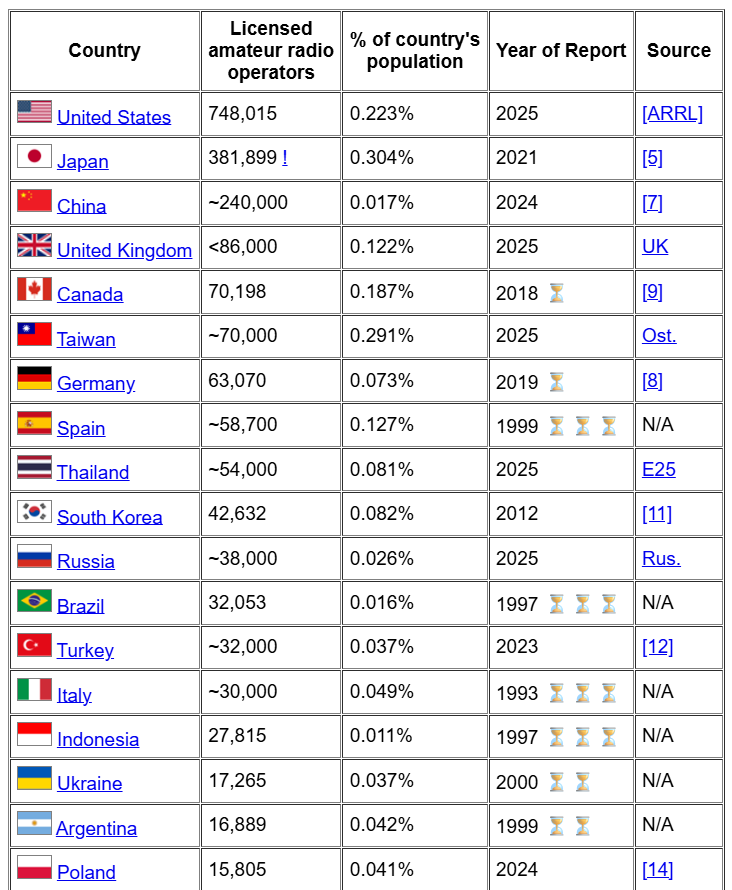
QSL.net licensed amateurs by the numbers – https://www.qsl.net/4x4xm/Demographics/How-Many-Radio-Amateurs.htm
Numbers don’t lie. Both of the most recent DXpeditions, Bouvet and Sable Islands, should have been dominated by stations in NA. Bouvet was not and Sable is turning the same way. For Bouvet, both Europe and Asia dominated the numbers. For Sable, Europe is dominating. See the charts below.
I have watched Sable Island operators make 100% European contacts for an hour at a time on the upper bands (10-30m), without a single NA contact being made. If I am missing a few, those few won’t skew the results in the other direction. During this same time frame, I checked PSKreporter for my own propagation, noting that I am hitting various stations all around the Sable Island DXpedition. I did in fact work Sable, thus far on 6 bands (100w and a wire). That’s not my point. I am not making this argument because I didn’t make a contact, I am making this argument because, once again, the numbers don’t lie.
If politics are at play, my suggestion would be, in the future, put your donation money toward DXpeditions where the operators have allegiance to NA stations. This goes for vendors of amateur radio as well. If you’re a vendor and a high percentage of your business comes from NA amateur radio operators, it would be in your best interests to support that high percentage of customers.
Based on the number of licensed amateur radio operators world-wide (see the chart below), properly balanced DXpeditions should ultimately break down to something like this (estimate):
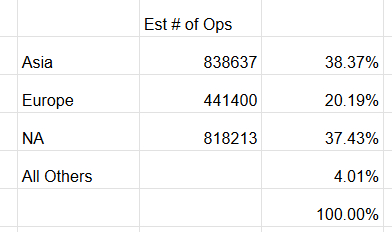
DXpedition teams can use any number of arguments to justify the areas they’re having QSOs with, the bottom line however, is a different story. For every excuse, another question can be asked “why did it go that way.” or “why didn’t you choose a different location for antennas”, etc. etc.
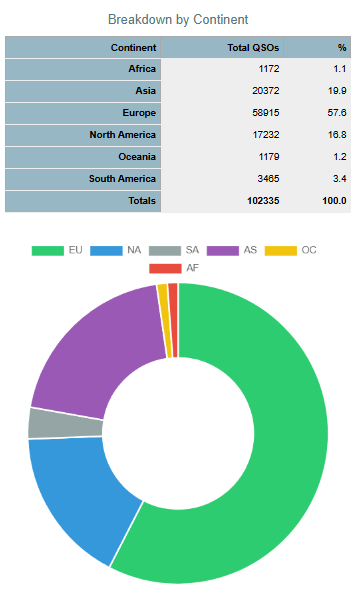
Bouvet Island (3Y0K) 2026 Statistics Per ClubLog – https://clublog.org/charts/?c=3Y0K#r
Sable Island (CY0S) 2026 (currently ongoing, will update when finalized)
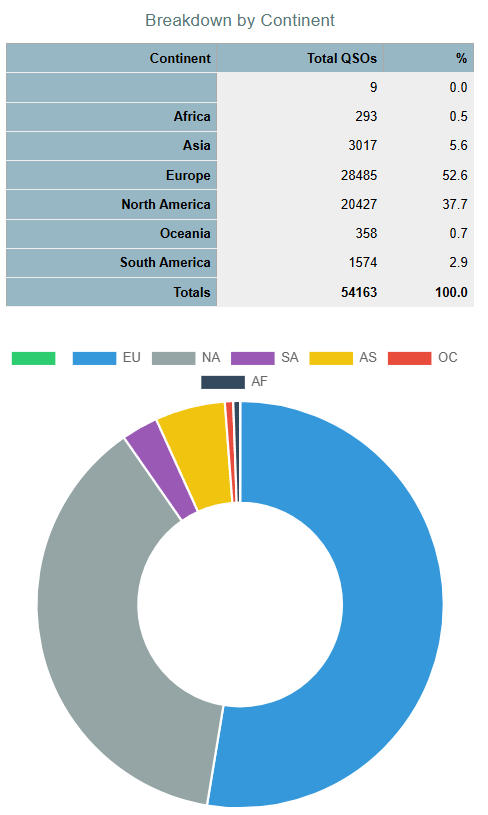
Sable Island (CY0S) 2026 Statistics, per ClubLog – https://clublog.org/charts/?c=CY0S#r
- Conformity

Typically, I am a non-conformist. Many societal norms irritate the hell out of me. I don’t go to funerals, I don’t really go to weddings unless the couple is extremely close to me. I don’t like parties. I am introverted. Normal social situations put me in an awkward situation. I get it. I know the routine.
In amateur radio, especially the modern era, there are some things that we all need to conform to, such as confirming QSOs. I get that a lot of younger hams don’t want to do paper cards. I am also 100% paperless. But with the ARRL’s Log Book of the World (LoTW) or at the very least, QRZ.com’s log book, it’s extremely easy to send confirmations to other hams and for other hams to receive said confirmations. Confirming calls is a thing and it’s a thing that most hams look for. There’s different reasons. Particularly for me is that I want to confirm I’ve had a conversation with someone in a particular country, that’s really why I am in this hobby, DX. Also, it would be nice to Work-All-States on each HF band (WAS) and getting the confirmation from those stations is key to getting WAS.
There are remote DX stations that absolutely refuse to electronically log. One station in particular doesn’t do it, simply because it “doesn’t interest them”. Ok, fine. It doesn’t interest them and normally, that should be reason enough. Except it isn’t.
We’re a community. If I participate in Field Day with my local club, I am going to carry my own weight and bring something to the table. If I work DX on phone, I am going to conform to the DX Code of Conduct, because that’s what the community in general expects of the participants. If I participate in the ARRL’s DX International Phone contest, be it all-in or just dabbling with a few contacts, I am going to submit my log for others to checklog against. If a DXer is working a split, I too will work that split (or go unheard).
Folks should be logging through one of the easy to do methods online. QRZ, while it won’t give out DXCC credits through LoTW unless you setup TQSL, create your key and import it into QRZ, is one form of electronic logging that will give others a confirmation of a QSO. Not perfect, but it’s better than nothing.
I also understand that LoTW can be confusing on how to get it setup and working, especially TQSL. There’s a variety of how-to’s available, including YouTube videos explaining it step-by-step.
Please, consider switching to an electronic logging method, utilizing QRZ and/or LoTW and get those confirmations out there to vast majority of ham radio operators that already log electronically. And FYI, it’s the majority of stations logging electronically. I have above a 75% confirmation rate on QRZ, most of which also confirm via LoTW.
- Down on the corner….
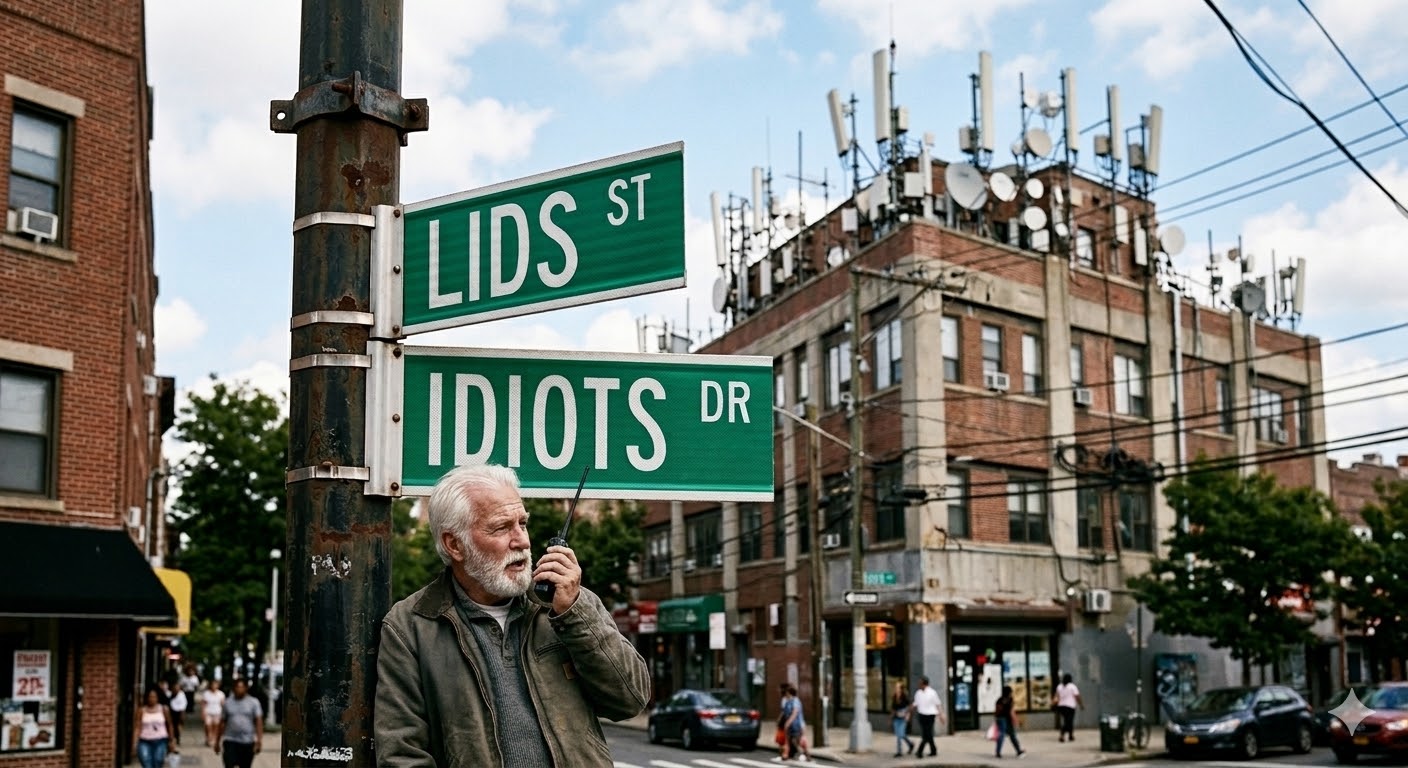
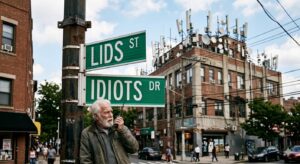 At the corner of Lids and Idiots, stands a man that represents the tens of thousands of amateur radio operators trying to make a contact with someone, anyone, with an ounce of intelligence. In the background, we see a building with 4387 antennas, doing everything in it’s power to stop the QSO from taking place, this building represents a small and usually insignificant portion of the amateur radio community, which on a normal day, would go completely unnoticed. Today is not that day.
Today, competent ham radio operators are attempting to contact a team that’s on THE MOST REMOTE UNINHABITED ISLAND on the planet, and the Lids and Idiots are jamming the airwaves with garbage. It’s not just a lack of intelligence causing issues, it’s also the intelligent causing issues with their human crafted DQRM. Both are causing disruption in their own way. One group can be corrected (maybe) and the other group, we cannot even come to terms with why they do what they do.
Lids and Idiots should simply RTFM (read the fucking manual).
The intentional jammers should GO STRAIGHT TO HELL.
It’s not “just” the digital modes, it’s not “just” the phone operators, and it’s not “just” the CW operators, it’s everywhere. On every band, on every mode, there’s low information operators doing something wrong that disrupts those of us staying within the parameters of said modes of operation and paying attention to the Bouvet Island Band Plan (3Y0K).
I feel there’s also another sub-group of Lids and Idiots that have decide to join the fray, those operators that have decided to take up FT8 on the spur of the moment, because they’re having no luck making contacts with 3Y0K on phone or CW. These new operators don’t know their asses from a hole in the ground and they’re jumping into digital modes thinking they can do it, because they are who they are. They have a ticket! They’re Amateur Radio Operators, they’re Extras! They’re extra alright, they’re extra special. Most of them are a cross between a Boomer and an empty pickle jar.
You may think it’s not that big of a deal for Lids to be transmitting their CQ below 1000hz on FT8. What if they’re doing so on the same part of the cycle as 3Y0K and on the same portion of the spectrum? They’re COVERING UP 3Y0K, which an already handicapped operation, with their 1200w of rock-n-roll power on a weak signal mode. Calling their CQ below 1000hz while 3Y0K is operating F/H mode gets them nowhere. 3Y0K won’t answer their call because 3Y0K is only listening for calls above 1000hz AND if the Lid is calling on the same part of the cycle as 3Y0K, they’re covering up 3Y0K to the world. RTFM!
On phone, you have Lid operators that have probably been operating for a very long time, jumping right on 3Y0K’s calling frequency and trying to return the call without even considering working a split. These are not only Lids, they’re also idiots. If you’re into DX’ing and you don’t consider a super rare entity such as Bouvet operating a split, you’re as dumb as a bag of hammers. If you’re new to DX’ing and just key the mic without considering anything of the above, you’re an idiot for not considering the nuances of the hobby in general. “Not knowing” is the perfect opportunity to stop yourself and read something to inform yourself of how things are suppose to be done.
Those that intentionally jam? Go fuck yourselves. You’re garbage. Human fucking garbage that should hold onto their antenna while transmitting and burn out ever last brain cell in your heads.
- Little Man Syndrome
 Do some of ya’ll have “Little Man Syndrome”, aka “Little Dick Syndrome”???
Why would I ask?
I am a pattern recognition person. I notice patterns that most people don’t see. Something I’ve noticed, there’s a large number of FT8 users that fail to complete a QSO after receiving a much lower db signal report than they gave. Maybe I am seeing ghosts, but it’s become a pattern, and I have noticed it. There’s little chance that I’ll ever unsee it.
Therefore, those of you that fail to complete the QSO after sending me a +7 and receiving a -17 from me, will be hereby regarded as having the Little Dick Syndrome.
Yes, I take into account all of the other variables involved in receiving a signal. Yes, including being covered up by someone else. Many times this happens on a band that’s currently not saturated with operators, sometimes it’s just a few folks on the band. Yes, I move my signal to open slots.
And finally, I see them on PSKReporter, reporting that they’ve seen me in the last few minutes, and it updates accordingly.
Little Dick Syndrome, yeah, you betcha!
N8GB
- The more you learn….
Of all of the things that I’ve learned about Amateur Radio in the past 11 years, the most important thing I’ve learned is, you cannot control the actions of others. To expand on that a little, each operator will operate a little differently. Different from other operators and different from you. What you *think* is the RIGHT way to do something, doesn’t necessarily translate to other operator’s methods. Don’t allow yourself to get frustrated over someone else’s actions. They do things THEIR WAY, as long as you’re within the guidelines (laws) for amateur radio use, you can do things YOUR WAY. It is not your place to police the rest of the world or any individual operator. Doing so is futile and can be extremely frustrating. See that big knob on your radio, use it to get away from the person irritating you. While it may be an inconvenience, while it may be frustrating to listen to an operator that you think is doing things wrong, it’s not your problem. Let it go.
- Foot Warmers
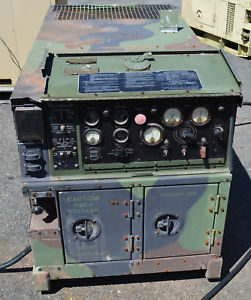 Let’s think about this for a second.
Speaking about HF (10-160m), if conditions are poor and you need to be “legal limit”, 1500w PEP to hit Japan, there’s a really good chance that the station in Japan will probably need to be at, near or above 1500w PEP to get back to you (some rare cases this may not be the case).
A different consideration: If a station in Europe is calling DX, running 1500w PEP and you make a contact with them and you’re running 1500w PEP and your buddy in another state is running 100w PEP and makes contact with the Euro station as well, did you really need the 1500w? (Maybe, if your antenna system sucks, which happens A LOT in amateur radio).
US Amateur Transmitter Power Limits
At all times, transmitter power must be the minimum necessary to carry out the desired communications. Unless otherwise noted, the maximum power output is 1500 watts PEP. Novice/Technicians are limited to 200 watts PEP on HF bands. Geographical power restrictions apply to the 630 meter, 70 centimeter, 33 centimeter and 23 centimeter bands.
Here’s yet another scenario: You’re rag-chewing on 80m at night with friends within 400 miles. You’re running 1500w PEP and you have invested thousands of dollars into a antenna system. Your buddy is running 100w and is able to be heard and have a conversation with most, if not all of the other stations, he’s running a di-pole at about 10ft off the ground (NVIS). Does he sound as good as you? Probably not. Is he able to carry out a conversation? Yes. Who is doing what’s right? He is. He’s able to have a conversation with the intended parties within the scope of the FCC Rules governing the amateur service. You are exceeding the limit by not reducing power to the necessary amount to carry out a conversation. The same holds true if there’s a QRP station near you that can contact those other stations as well. Did you try to run lower power? Decrease from 100w to 25w, down to 5w? Who then, is doing what’s right? The QRP station.
Power isn’t everything. Power, like many things in life, is compensation for other things. In most cases, power will compensate for a poorly designed antenna system. Power will compensate for poor operator skills.
Learn to do things right and you can spend the money intended for a big, high-dollar amplifier on things that matter, like good antennas, good feedline, that headset you’ve been wanting, another rig, another tuner. Amplifiers have their place, I am not against amplifiers, I am against using amplifiers when they’re not needed. Why do you want stations that cannot contact you back, to be able to hear you? Conditions are key, antenna systems are the next thing that matters. Much further down the list is the power you’re putting out. If you can’t hear a station, you cannot have a QSO with that station.
- FT8 73
 If you’re dead set on always getting a “73” at the end of every QSO on FT8 mode, to the point that you’re unwilling to confirm a contact because of that, you’re wrong.
73 is keeping in good etiquette, or perhaps, it’s simply a platitude. It is not however, part of the conversation that constitutes a completed QSO. Get over it. Move on. Stop living in the past. Callsigns, Grid, TX Signal Report, RX Signal Report. Done.
FT8, by design, is meant to be a super quick form of communicating and passing the bare minimum of information in order to confirm contacts, it’s not rag chewing. It’s not a round-table. It’s not a net.
- The Sharing of a Jewel
 Just found this Little Jewel on the interswebs. While I don’t believe it’s 100% accurate, (there are many times that phonetics for callsigns are extremely important on phone ops), it dang sure touches my heart 🙂
http://www.qsl.net/dl4tt/w5vsr.html
Now, you must be ready with this one at a moment’s notice: “HI.” Never, ever, laugh if you find something funny. Say “HI” or even better “HI-HI.” It doesn’t really take the place of laughter, but it tells the other operators that you know how to laugh on CW.
Of course, you may be familiar with this blog entry of mine that reflects the same attitude toward “HI-HI” as the above quote from W5VSR’s post.
I think “QRZ the Frequency/Channel” is now a thing of the past (probably broke that bad habit by people like W5VSR writing articles [blog posts? like mine? well, damn!] about such behavior).
As for “over”, that is within the scope of the “plain English” form of radio comms, which is widely used in professional radio comms, military, etc. While in amateur radio it may not be necessary to use such for a group discussion (where everyone is familiar with everyone else in the group), for making short conversation contacts or DX, it’s very useful. The operators are not familiar with each, therefore, the tonal inflection of voices may not be familiar with one another, among other things.
Just about anything carried over from CB land stings the amateur radio operator, I mean, well, we did pass a test, right? [tic] By the way, what is your handle? /sarcasm.
As for marking oneself /portable, /maritime mobile, /mobile, /a (european) etc. I am of course a proponent of such. This allows someone to log each of these separately, and might I add, very easily, without making comments/notes, of which, it also makes referencing these contacts very easily, especially in the digital age of logging. There’s a lot of people working portable these days, mountain-topping, peaks on the air, national parks on the air, mobile, QRP (another valid use of the Q codes) and when they give the stroke-whatever, usually obtain priority in pileups. While this may offend the sensibilities of those I also add in the comments for a contact a couple of important things, one in particular is if the distant operator is running as a /JEJ. This is a very important aspect of the conversation, one that I don’t want to forget.
I should not have to phonetically give my callsign out to everyone I am communicating with, I agree with this 100%. The problem is, not 100% of my contacts have the shit cleaned out of their ears to be able to understand what is being said to them. Even with giving it phonetically, in a one-letter-per-second recitation of my callsign, piss poor operators cannot understand what is being said. Do they even have a pencil and paper in front of them? Say each of the following so that it takes you one second per letter, sounded out phonetically: W H I S K Y – pause – V I C T O R – pause – Z E R O – pause – C H A R L I E – pause Q U E B E C, if you can’t understand that, perhaps you should learn CW. But, of course, there’s many people that I’ve encountered, either personally or while watching others operate, that cannot comprehend a phonetically given callsign. I’ve tried variations of the process, I’ve given out the call in several different ways, with standard phonetics and a mixed bag of other phonetics. I’ve tried straight-up alpha/numeric callsigns, and people simply cannot hear it, yet, they’ll return with the Holy Grail 5/9 Report!
Consider this: The best thing about using Q codes? It eliminates people using the 10-code.
QSL? WV0CQ will be QRT. 73! 44! HI HI!
- …now back in my day.
 Here’s a perfect example of an old-hand attempting to weigh judgement on a younger-hand for doing things differently, and therefore, ignoring this “new” way of doing things, simply because “we did it this way back in the day.” This type of mentality KILLS participation. It’s a good thing that I am used to assholes like this, and I have the intestinal fortitude to tell them to go get bent.
I was operating from my /A lternate QTH this past weekend, Dec 30 – Jan 1 2017. I was band jumping, trying to make several contacts when I found 17m to be open. K7MX was calling CQ on 18.146 when I tried to get back with him. Once I had put out my callsign, wv0cq/a, he began questioning why I was using it, explaining to me what stroke-whatever meant (to him), how they did it back in his day. I explained my situation with having two totally different “homes” with permanently affixed antenna systems and shacks and that it is common in Europe to use the /a as a designation for an alternative QTH. He didn’t like this. He told me that “back in the day, they would use /8 or portable…”, neither of which is accurate. Neither of which really tells the tale of where you are.
If you go to QRZ and lookup “wv0cq/a”, you will see an accurate address and QSL card for my alternate QTH. Portable8, /8 or anything else would not be accurate [all the time] because I could be portable anywhere. My /a is a fixed location. It is not portable. It should not be considered proper to use [just] my callsign without a modifier because that callsign is licensed for my home (permanent residence) QTH, not my alternate QTH.
Lemme tell ya something, before you go off judging other hams and making an ass of yourself, perhaps you might want to consider treating people with a little more respect. I don’t much give a rat’s ass how many decades you’ve been in this hobby, if you’re doing something wrong, no matter how many times you do it wrong, it won’t be correct.
Here’s some links for the lids in the amateur community, who usually turn out to be “old hands” with 30+ years of “experience”, that, in their minds, cannot do any wrong, that are too lazy to actually stay in touch with what’s happening in the amateur radio community and the changes that are going on (without their acceptance none-the-less).
If you’ve made it this far in the blog entry, you may be interested in The Story of /A.